
|
|


|
PEEPING TOM Hold me accountable!
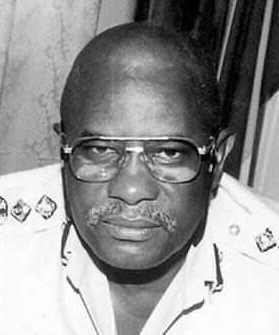
“Hold me accountable!” so said the Commissioner of Police after taking the oath of office. He had set a personal standard by which he should be judged. He must be kept to this standard. However, regardless of what the Top Cop said at his swearing-in, all public officers are required to be held to public scrutiny and accountability. Public offices are not personal kingdoms to be used at anyone's whim and fancy. In the performance of their duties, public officers must adhere to standards of good governance and this includes being held accountable for their performance. The office of the Commissioner of Police is not an island. It is not insulated absolutely from the political directorate. The right and proper relationship is one in which the commissioner, in the discharge of his duties, is guided by the policies of the government. Thus, if the government feels that there ought to be emphasis on creating safe corridors within the country, the police are obligated to ensure that this particular policy directive is implemented. The Commissioner of Police is answerable to the Minister of Home Affairs in so far as the performance of the Guyana Police Force is concerned. While the minister is within his or her rights to hold the commissioner accountable, the minister should stay clear of giving specific instructions concerning police matters, as for example instructing that a person be issued with a firearm licence. The Guyana Police Force is not an independent constitutional office. It reports to and is accountable to the government for its performance. However the Guyana Police Force as a public body is equally accountable to the public. This does not imply that the public is entitled to information regarding investigations while those investigations are in progress, or does it mean that the police should reveal their anti-crime tactics. What it does mean, however, is that the police force has an inherent obligation to demonstrate to the public that its performance and management follow acceptable standards of governance. I do not know whether there is any truth in the allegation that three senior officers, all of whom are of East Indian descent, have been given desk duties and are not being gainfully occupied. I do not know whether there is any truth in the suggestion that these officers are being sidelined. What I do know is that it is the responsibility of the police top brass to debunk these allegations by publicly addressing them. And why should the Guyana Police force do this? Why should the Guyana Police Force be forced into dignifying allegations that may be malicious or spurious? No one expects the Guyana Police Force to respond to each and every allegation hurled at it. But surely in a situation where we have a force in which over ninety per cent of both the officer and staff are of one ethnic group and when this force operates in a society that is badly divided, not addressing such a serious allegation is irresponsible and does not lend to the winning public ownership and confidence. I therefore urge the Top Cop to make a statement on just what duties are being assigned to Messrs. Merai, Ramnarine and Balram. I ask him to clarify their status and lay to rest what I hope is only idle speculation. What is no guessing game is what separates successful entities from failing counterparts. There is a factor that differentiates successful companies from unsuccessful companies. Successful private companies do not carry deadweight. In the modern world, successful companies ensure that they get the best and most out of their employees. You do not find in these successful firms, staff not being gainfully employed. These companies measure their performance by profits and having to pay staff with nothing to do is a drain on profits. My philosophy has always been that no matter how good a person is, if he or she is not making a positive contribution to the organization, if he or she is not earning his keep, if he or she is not gainfully employed, that person should be sent home. I do not believe in sidelining staff or engaging in constructive dismissals by making someone either redundant or not giving them work to do. And so I would hope that in addressing the case of the three senior police officers, the Guyana Police Force would ensure that they demonstrate to the public that the GPF is getting full value out of these employees who, after all, are being paid from taxpayer's funds. The next issue, which I feel the police should address publicly, concerns cases in which certain senior officers were alleged to have done certain things but have not been dismissed or demoted. For example, there was a case, highly publicized in this newspaper, where a rank was said to have used false number plates on an exhibit and was using the exhibit for his own personal purposes. If there was any truth to this allegation, that rank should have been dismissed forthwith. There should be no place in the Guyana Police Force for any person who would dare to abuse his office in such a manner, much less for that person to be promoted. I have argued repeatedly in these columns, that given the nature of our society, it is not enough to leave the resolution of these contentious issues solely to the top brass of the Guyana Police Force. What is required is for a system that allows for independent monitoring of internal practices of the Guyana Police Force. I have argued this issue before in relation to the question of ethnic balancing of the disciplined services. It is not just a case of the police having fair recruitment practices. If persons out there feel that there is a culture that exists within the organization that can become oppressive and lead to victimization and discrimination, they will not be inclined to become members of the force no matter how attractive and fair the recruitment process. Where for example, does someone who may genuinely feel that he or she is being sidelined turn to in the organization? The Police Service Commission has powers of appointment, dismissal and disciplining of members of the Guyana Police Force but it has no powers to investigate charges of mal-administration, and if complaints are made to the government and the government seeks to intervene, it will inevitably be met with the charge that they are seeking to interfere in the management of the Guyana Police Force. The solution to this problem may be to extend the terms of reference of the Police Service Commission to investigate certain charges within the institution over which it has oversight. This can only enhance greater public accountability. In the meantime, if any member of the force feels that he or she is being victimized because of his or her ethnicity, he or she can always approach the Ethnic Relations Commission or the Guyana Human Rights Association to see whether the complaints can be investigated.
Monday
05-30-2005 |
Another "square peg in round holes" Commissioner of Police, Winston Felix

Mohammed Hassan Ebrahimi, was shot twice in the head